
BB101 is the government guidance document setting acoustic performance standards for school buildings in England. It applies to all new school construction and significant refurbishments, and compliance is assessed during the design stage using acoustic modelling to verify performance against internally defined targets.
BB101 Compliance for Schools
BB101: Guidelines on Ventilation, Thermal Comfort, and Indoor Air Quality in Schools sets the standards for the design of school buildings in the UK. Introduced in 2018, it replaced the 2006 version and is now the definitive reference for ensuring optimal learning environments.
Our extensive experience working with M&E teams, architects, and contractors on school projects allows us to deliver solutions that not only meet BB101 standards but also enhance the overall performance of the building. Through our Dynamic Simulation Modelling (DSM) tools and consultative approach, we add significant value to your team.
The Importance of BB101 for Schools
BB101 sets out essential requirements for ventilation, thermal comfort, and indoor air quality, ensuring that classrooms provide the best possible conditions for effective teaching and learning. These guidelines are critical in maintaining:
- Adequate fresh air circulation to control CO2 levels
- Comfortable temperature ranges for year-round use
- Low pollutant levels to protect the health of students and staff
Key Updates in BB101 (2018)
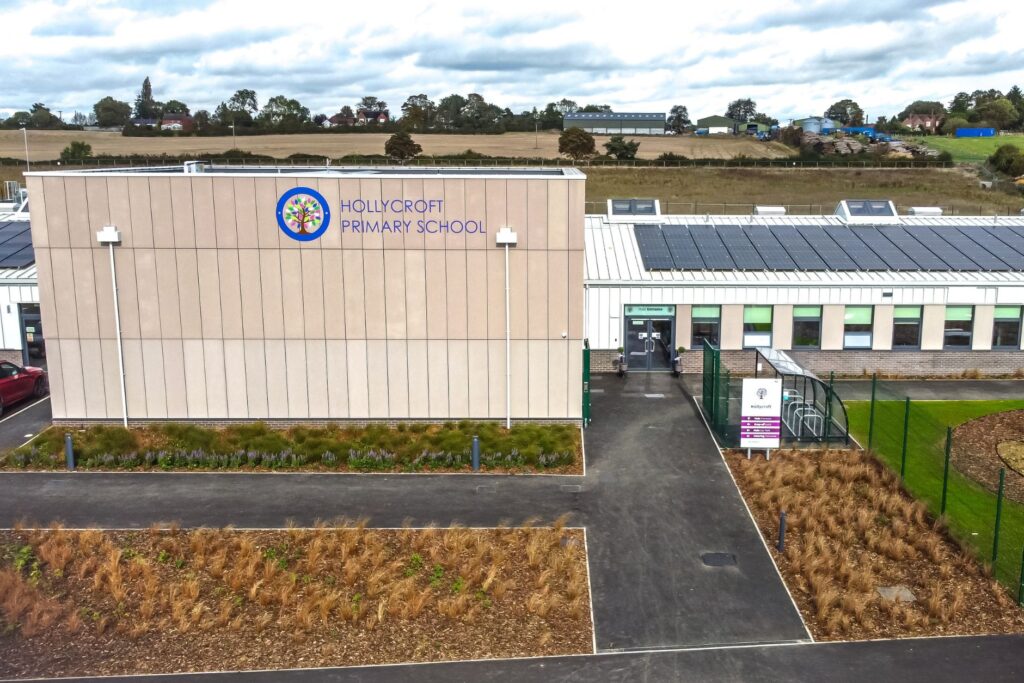
Hollycroft Primary School
The 2018 update to BB101 for schools introduced more detailed guidance, particularly on how to manage indoor air quality and prevent overheating in classrooms.
One of the major changes is the requirement to use DSY1 2020 weather files for summertime overheating calculations.
These weather files account for more realistic future climate conditions, ensuring that school buildings are designed to remain comfortable, even during increasingly warmer summers.
The guidance covers both new teaching areas and non-teaching spaces, offering detailed performance targets for each. At Build Energy, we ensure that all areas of a school building, from classrooms to corridors and offices, meet the necessary standards for thermal comfort and air quality.
BB101 Guidelines Overview
The BB101 guidance covers three main areas of compliance, each relevant to the design and assessment of school buildings.
1. Design of Indoor Environments
This section introduces the factors affecting the design of school environments. It focuses on optimizing indoor spaces to enhance student and staff comfort while ensuring energy efficiency. Proper ventilation, thermal comfort, and air quality are vital considerations.
At Build Energy, we utilise Dynamic Simulation Modelling (DSM) to predict how a building will perform across different seasons, ensuring that both natural and mechanical ventilation systems are designed to meet BB101 requirements. Our simulations help prevent issues such as cold draughts in winter and overheating in summer, while maintaining high indoor air quality year-round.
2. Regulatory Framework for Schools
This section provides a detailed explanation of the regulatory framework and performance standards set by the Department for Education. These standards are essential for compliance with UK building regulations.
3-5. Design for Performance
The final sections of the BB101 guidance cover specific design strategies to achieve the required performance for ventilation, indoor air quality, and thermal comfort. These sections emphasise the importance of well-thought-out design in both naturally ventilated and mechanically ventilated buildings.
At Build Energy, we bring extensive expertise in energy and ventilation modelling to the table. Our team can:
- Optimise ventilation rates to ensure CO2 levels remain below harmful thresholds
- Model mechanical systems that meet stringent air quality targets
- Implement passive cooling strategies to prevent summertime overheating
For more insights on how to implement the latest BB101 for schools guidelines into your project, you can consult the official GOV.UK BB101 guidelines.
Frequently Asked Questions
What is BB101 and who does it apply to?
BB101 – Guidelines on Ventilation, Thermal Comfort, and Indoor Air Quality in Schools – is the UK government’s technical guidance for the design of school buildings. Introduced in 2018, it applies to all new and significantly refurbished school buildings in England. It sets minimum standards for fresh air supply, CO₂ concentration, internal temperatures, and acoustic performance to ensure classrooms provide effective learning environments.
Why is BB101 compliance important for school design?
Poorly ventilated or overheating classrooms have a measurable negative effect on pupil concentration and attainment. BB101 sets evidence-based standards to prevent these issues. Beyond occupant wellbeing, local authorities and Education and Skills Funding Agency (ESFA) projects require demonstrable BB101 compliance as part of the building approval process. Non-compliance can lead to design revisions, delays, and planning issues.
How does Build Energy assess BB101 compliance?
Build Energy uses dynamic simulation modelling (DSM) to assess whether a school design meets BB101 requirements for thermal comfort and overheating. We model the building’s performance across a range of weather conditions and occupancy scenarios, producing a detailed report confirming compliance or identifying areas where design changes are required. Our consultative approach means we work alongside the design team to find practical, cost-effective solutions.
Does BB101 compliance relate to Part O or BREEAM?
BB101 sits alongside rather than replacing other compliance requirements. Part O of the Building Regulations addresses overheating in residential buildings, but schools follow BB101 for thermal comfort. BREEAM assessments for schools (BREEAM Education) include credits for thermal comfort and indoor air quality that align closely with BB101 criteria. Build Energy can address all three within an integrated assessment where required.
Call 0330 055 34 05 · email be@buildenergy.co.uk · or tell us about your project →