
BREEAM is the UK’s leading sustainability assessment method for non-domestic buildings. It covers ten categories including energy, water, health and wellbeing, transport, materials and waste. In particular, non-domestic assessments apply to new commercial, retail, education, healthcare and public sector buildings, as well as major refurbishments and fit-outs. An assessment involves a BRE-accredited assessor reviewing the design and specification against BREEAM criteria and generating an evidence report. BRE then certifies the assessment and registers the rating for the life of the building.
What is a BREEAM Non-Domestic Assessment?
In practice, BREEAM non-domestic assessments cover a wide range of building types. Separate schemes cover new construction (BREEAM New Construction), in-use buildings (BREEAM In-Use) and refurbishment and fit-out projects. A licensed BREEAM assessor evaluates performance across ten categories – including energy, health and wellbeing, water, materials, waste and ecology. The assessor then submits an evidence report to BRE for third-party verification and certification. BRE awards ratings from Pass through to Outstanding. Excellent is the most common planning requirement in England and Wales.
BREEAM Accredited Professional (AP)
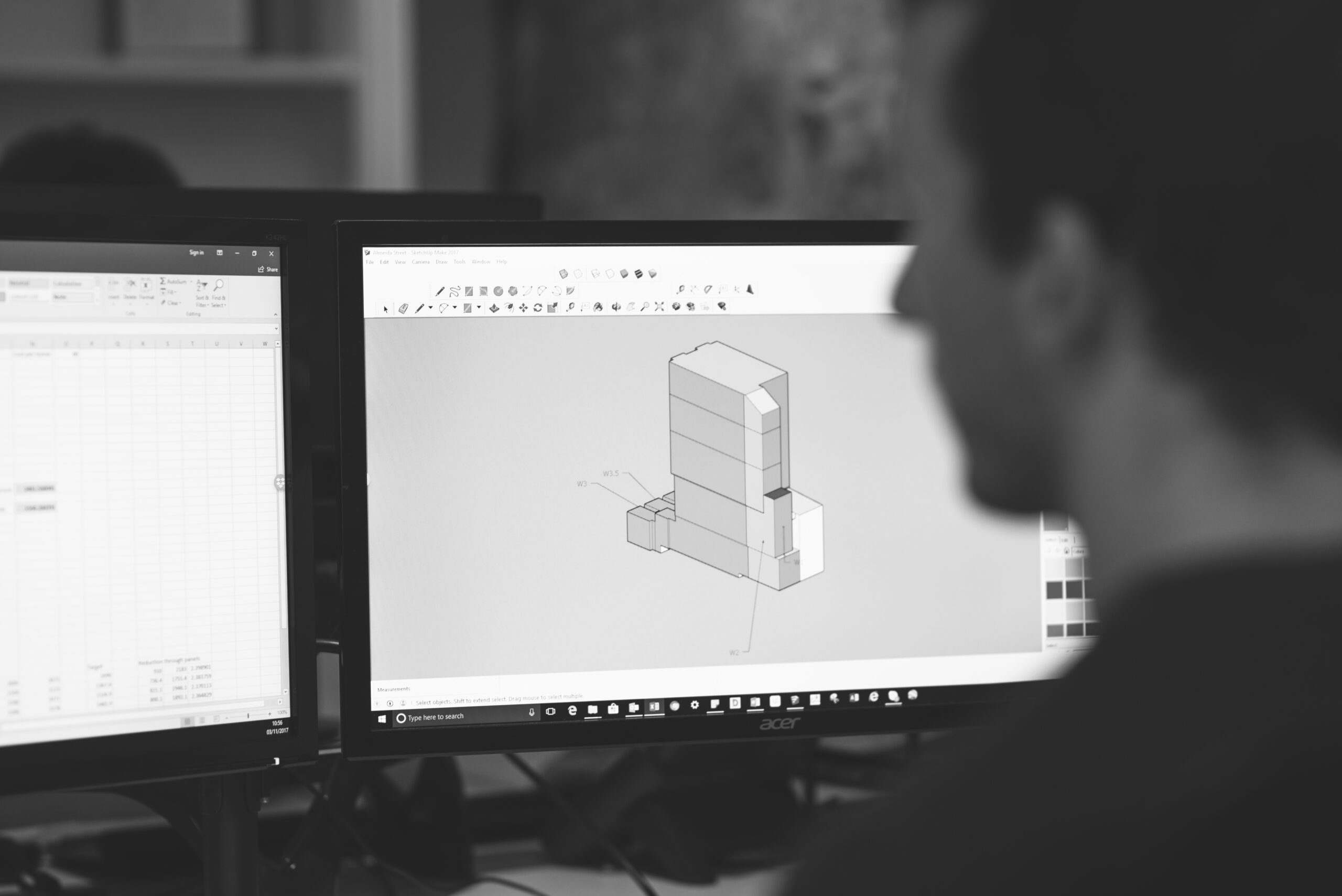
Additionally, our BREEAM assessors hold the AP qualification, which allows the project team to achieve additional credits under Man 1 and Man 3 sections.
A BREEAM AP (Design & Site) can assist you from the very beginning of your project to ensure you meet your BREEAM targets as easily and cost effectively as possible. We also offer the BREEAM AP role as a standalone service.
When to Appoint Your BREEAM Assessor
BREEAM assessments require careful planning, especially those with higher target ratings. Some credits have strict time limits and if not actioned at RIBA stage 2, the team loses them.
Other credits become more difficult and expensive to achieve the later a team considers them. For this reason, it is important to bring an assessor on board as early as possible.
Supporting Services and Evidence
We can provide additional services to assess and evidence your BREEAM credits. We can package a solution tailored to your project requirements, including:
- BRUKL & EPC – Ene 1
- Thermal Comfort Assessment – Hea 4
- Airtightness – Man 4
- Thermographic Survey – Man 4
- Building User Guide – Man 4
- Passive Design Analysis – Ene 4
- Low Zero Carbon Feasibility Study – Ene 4
- Indoor Air Quality Plan and Testing – Hea 2
- Life Cycle Assessment – Mat 1
Frequently Asked Questions
What is a BREEAM non-domestic assessment?
A BREEAM non-domestic assessment is a formal evaluation of a building’s sustainability performance against the BRE Environmental Assessment Method standard. It covers categories including energy, water, materials, waste, ecology, transport, health and wellbeing, and management. BRE weights credits across these categories and combines them to produce a final rating: Pass, Good, Very Good, Excellent, or Outstanding. An accredited BREEAM assessor carries out the assessment and submits it to BRE for certification.
Which BREEAM schemes cover non-domestic buildings?
The main BREEAM schemes for non-domestic buildings are BREEAM New Construction (NC) – for new build commercial and public buildings – and BREEAM Refurbishment and Fit-Out (RFO), which applies to existing non-domestic buildings undergoing major works. BREEAM In-Use applies to occupied buildings seeking ongoing certification. Build Energy has experience across all three schemes and can advise which applies to your project.
When is a BREEAM non-domestic assessment required?
Most planning conditions require a BREEAM assessment, where the local planning authority specifies a minimum BREEAM rating (typically Very Good or Excellent) as part of the planning consent. Employer’s requirements, funding conditions, or client sustainability policies may also make BREEAM certification necessary. Some clients pursue BREEAM voluntarily to demonstrate sustainability credentials or support lettability and asset value.
How long does a BREEAM non-domestic assessment take?
A BREEAM New Construction assessment covers two stages. The Design Stage (interim) assessment is submitted once the design is sufficiently developed, and the Post-Construction Stage (final) assessment follows after practical completion. The overall timeline mirrors the project programme. In straightforward cases, Build Energy can typically complete the Design Stage submission within 4–6 weeks of appointment; more complex schemes take longer. We provide a clear programme at the outset so your team knows what to expect and when.
Call 0330 055 34 05 · email be@buildenergy.co.uk · or tell us about your project →