
The Home Quality Mark is now BREEAM UK New Construction: Residential, usually shortened to BREEAM Residential. BRE made the switch in April 2025, bringing new homes into the same BREEAM family that planners, funders and investors already know from commercial buildings.
We assessed homes under HQM while it was live and have certified BREEAM Domestic Refurbishment projects for many years, so we know how BRE residential schemes work in practice. Because our team also produces the SAP, overheating, daylight and testing evidence, your rating is planned in from the start rather than chased at the end.
What is BREEAM UK New Construction: Residential?
BREEAM Residential is an independent certification scheme for new-build homes. It scores each home on three indicators – Cost, Wellbeing and Footprint – and BRE issues a certificate showing a BREEAM rating, a star rating and a score out of five for each indicator.
The scheme looks well beyond energy, rewarding homes that are comfortable, healthy and built to last. The assessment covers:
- Energy use and running costs
- Natural light and overheating
- Indoor air quality and noise
- Materials and embodied carbon
- Water, sustainable transport and climate resilience
- The information handed over to residents
It applies to houses, apartments, build to rent and affordable housing anywhere in the UK, and BRE publishes a full scheme overview on the BREEAM website. If you are new to BREEAM, our guide to what BREEAM is explains how the residential scheme sits alongside the commercial ones.
From Home Quality Mark to BREEAM Residential
BRE launched the scheme on 16 April 2025 as version 6.1, a light update to HQM V6, and closed new HQM V6 registrations on 28 May 2025. For most projects, the change is one of name rather than substance.
- Unchanged – the scoring system, rating thresholds and quality-focused criteria that made HQM distinctive
- Updated daylight – the natural light issue now follows current industry methods
- Simpler life cycle assessment – it can now be modelled at building level rather than dwelling by dwelling, matching how developers already report embodied carbon
- New certificate – homes now receive a BREEAM-branded certificate in line with other BREEAM New Construction schemes
Projects already registered under HQM ONE or HQM V6 can either finish under HQM or transfer free of charge. A transfer means re-entering the data in a new tool and cannot be undone, so talk to us before switching a live project. BRE sets out the detail in its knowledge base note on the change.
Does BREEAM Apply to Residential Buildings?
Yes – the real question is which scheme. Long-term, self-contained homes assessed under SAP fall under BREEAM Residential, while buildings with rooms rather than flats, shared living space, care provision or short-stay occupants are treated as multi-residential under the BREEAM non-domestic scheme.
| Project type | Applicable BREEAM scheme | Notes |
|---|---|---|
| New houses and flats for sale or private rent | BREEAM UK New Construction: Residential | We assess each home individually and can include common areas in apartment blocks |
| Build to rent and affordable housing | BREEAM UK New Construction: Residential | Same approach as homes for sale |
| Retirement and sheltered housing | Residential, or multi-residential | Residential applies where units are comparable to a normal self-contained flat |
| Student accommodation | Residential, or multi-residential | Self-contained studios suit the residential scheme, while cluster flats with shared living space usually fall under multi-residential |
| Care homes | BREEAM New Construction (multi-residential) | Care provision places these under the non-domestic scheme, with SBEM energy evidence |
| Refurbishment of existing homes | BREEAM Domestic Refurbishment | See our BREEAM Domestic Refurbishment service |
If your project sits near the boundary, we will confirm the right scheme with BRE before registration. The choice also decides whether SAP or SBEM feeds the energy credits, and our guide to SAP calculations explains how the residential energy model works.
BREEAM Residential Ratings and Star Scores
Every certified home receives a BREEAM rating and a matching star rating in half-star steps. The thresholds are identical to HQM V6, so a four-star HQM home is now BREEAM Very Good.
| BREEAM rating | Star rating | Minimum score |
|---|---|---|
| Outstanding | 5 stars | 80% |
| Excellent | 4.5 stars | 60% |
| Very Good | 4 stars | 48% |
| Good | 3.5 stars | 38% |
| Pass | 2.5 stars | 24% |
A three-star result sits between Pass and Good at 30%, and stars continue below Pass down to a single star for homes meeting only the minimum standards.
If your planning condition or funding agreement was written around HQM stars, we will map it to the equivalent BREEAM rating at the outset so your target is clear from day one.
How a BREEAM Residential Assessment Works
 There are two formal stages, each quality assured by BRE, with a pre-assessment at the start to set a realistic target.
Pre-Assessment and Target Setting
We run a short workshop with you and your design team to identify the credits your site can realistically achieve, and what each one will cost. You come away with a credit tracker showing who owns every piece of evidence.
If you want that coordination role carried right through design, our BREEAM Accredited Professional service covers it.
Design Stage Assessment
We review the drawings, specifications and technical reports against the criteria, then submit the interim assessment to BRE. The interim certificate gives planners and funders early confidence, and it is often what discharges a pre-commencement condition.
Post-Construction Assessment
Once the homes are complete, we confirm that what was built matches the design, using site inspection, photographs, commissioning records and as-built calculations. We add test results such as air tightness and indoor air quality at this stage, and BRE then issues the final certificate for each home.
When to Appoint Your Assessor
The earlier we are involved, the more credits stay open and the cheaper your target becomes. Stage 1 or 2 of the RIBA Plan of Work is ideal, while layout, orientation and glazing can still respond to daylight and overheating criteria.
That said, our accredited BREEAM assessors and wider BREEAM consultant services team can join at any stage, and we will tell you honestly which credits are still within reach.
Supporting Services and Evidence
Many residential credits depend on technical evidence rather than paperwork alone. Keeping that work in the same team as the assessment keeps your programme tight and your evidence consistent.
- SAP calculations and EPCs – energy and running cost credits
- Overheating assessment to CIBSE TM59 – temperature and thermal comfort
- Daylighting calculations – natural light
- Life cycle assessment and whole life carbon – environmental impact of materials
- Indoor air quality testing and indoor air quality plans – indoor pollutants
- Air tightness testing and thermographic surveys – inspection and completion
- Sustainability statements and energy statements – planning stage commitments
Indoor Air Quality Testing for BREEAM Residential
The indoor pollutants issue rewards homes that pass air testing after construction but before anyone moves in. Testing covers total volatile organic compounds (TVOC) and formaldehyde, and an ISO/IEC 17025 accredited laboratory must analyse the samples.
BRE allows representative sampling where several homes share a specification, which keeps costs down on larger schemes. We design the sampling strategy and carry out the testing, and an early indoor air quality plan steers product choices so your homes pass first time.
Why Developers Choose Build Energy
Residential certification runs smoothly when the assessor and the people producing the evidence work as one team. That is exactly how we deliver BREEAM Residential.
- Proven on BRE residential schemes – years of BREEAM Domestic Refurbishment and Code for Sustainable Homes certification, plus HQM, and BRE has confirmed HQM assessors can work on the new scheme without retraining
- Evidence in-house – SAP, overheating, daylight, life cycle assessment, air tightness and indoor air quality testing from one team
- Targets protected – a credit tracker from day one, with early warning if a design change puts credits at risk
- Planning conditions handled – we check the wording, map any HQM target to its BREEAM equivalent and deliver the evidence to discharge it
- UK-wide – from our base in Dorset, we support developers and contractors across the country
Our Residential Track Record
We’ve worked on BREEAM Assessments for many residential schemes, for example when assessing to BREEAM Domestic Refurbishment, the sister BRE scheme that takes the same approach for refurbished homes rather than new ones.
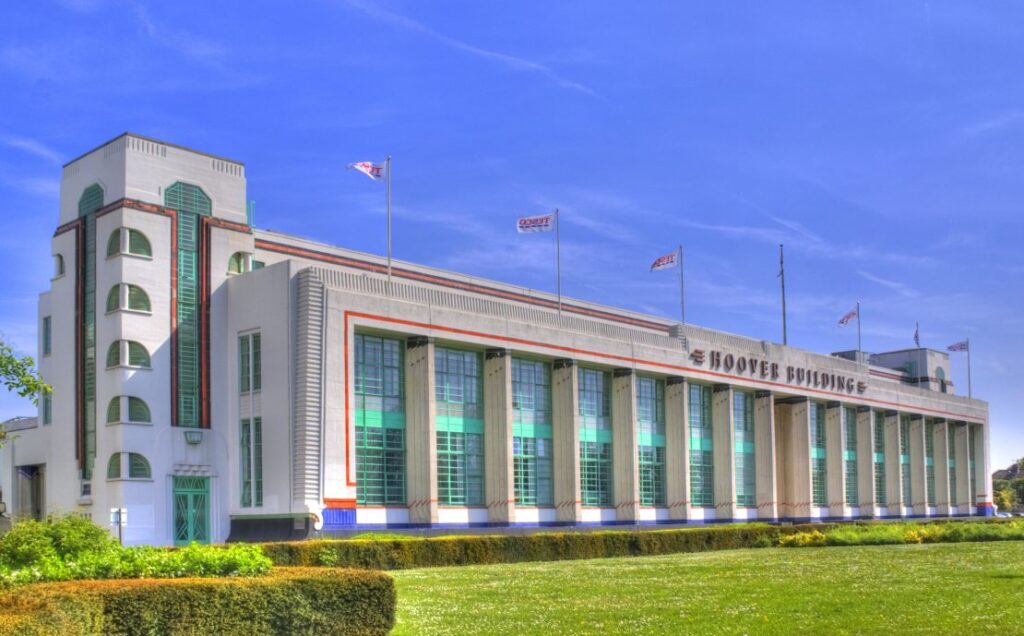
A standout project is the Hoover Building in Perivale, where we worked with Oakley M&E, Interrobang Architects and IDM Properties to turn the Art Deco landmark into 66 apartments rated BREEAM Excellent.
Frequently Asked Questions
Has the Home Quality Mark been replaced?
Yes. BRE rebranded the Home Quality Mark as BREEAM UK New Construction: Residential on 16 April 2025. New HQM V6 registrations closed on 28 May 2025. The new scheme, version 6.1, keeps the HQM scoring system and rating thresholds. Its main updates affect the daylight and life cycle assessment issues.
What happens to projects already registered under HQM?
They can continue under their original registration and receive an HQM certificate. Alternatively, they can transfer to BREEAM UK New Construction: Residential at no extra registration fee. A transfer means re-entering all assessment data in the new tool, and you cannot reverse it. Make the decision early, ideally before you submit design stage evidence.
Is BREEAM Residential required for planning permission?
It is not a national requirement. However, a growing number of local planning authorities now reference it, or HQM, in their policies and conditions. Some funders and lenders also use it as evidence of sustainability performance. We review the exact wording of any condition at the start so the target rating is clear.
What is the difference between a BREEAM rating and a star rating?
Each certified home receives both. The BREEAM rating runs from Pass to Outstanding. The star rating runs from one to five stars in half-star steps. Very Good equals four stars, and Outstanding equals five. Each home also gets separate scores out of five for Cost, Wellbeing and Footprint.
Does BREEAM Residential involve indoor air quality testing?
To achieve the indoor pollutants credits, homes need testing after construction but before occupation. Testing measures TVOC and formaldehyde levels, and an ISO/IEC 17025 accredited laboratory must analyse the samples. BRE allows representative sampling where several homes share a specification, provided the sample covers each distinct home type.
When should we appoint a BREEAM Residential assessor?
As early as possible, ideally at RIBA Stage 1 or 2 before the design team fixes the layout and specification. Many credits, including daylight, overheating and sustainable transport, depend on decisions made at concept stage. Appointing late usually means fewer credits remain realistically available, and the target rating costs more to achieve.
Call 0330 055 34 05 · email be@buildenergy.co.uk · or tell us about your project →