
Post-construction Indoor Air Quality Testing confirms that indoor pollutant levels stay within safe limits before a building is occupied, and it directly supports BREEAM compliance.
This testing is an essential final stage in the quality assurance process, helping project teams demonstrate that indoor environments have been properly ventilated and are safe for future users.
We provide BREEAM-compliant Indoor Air Quality Testing nationwide. Our technicians attend site to carry out sampling, and we work with UKAS-accredited laboratories to analyse results using ISO 16000 methods. In addition, we align with both current BREEAM New Construction Version 6.1 and the latest Version 7 requirements. After testing, we issue a clear compliance report that is ready for BREEAM evidence submission.
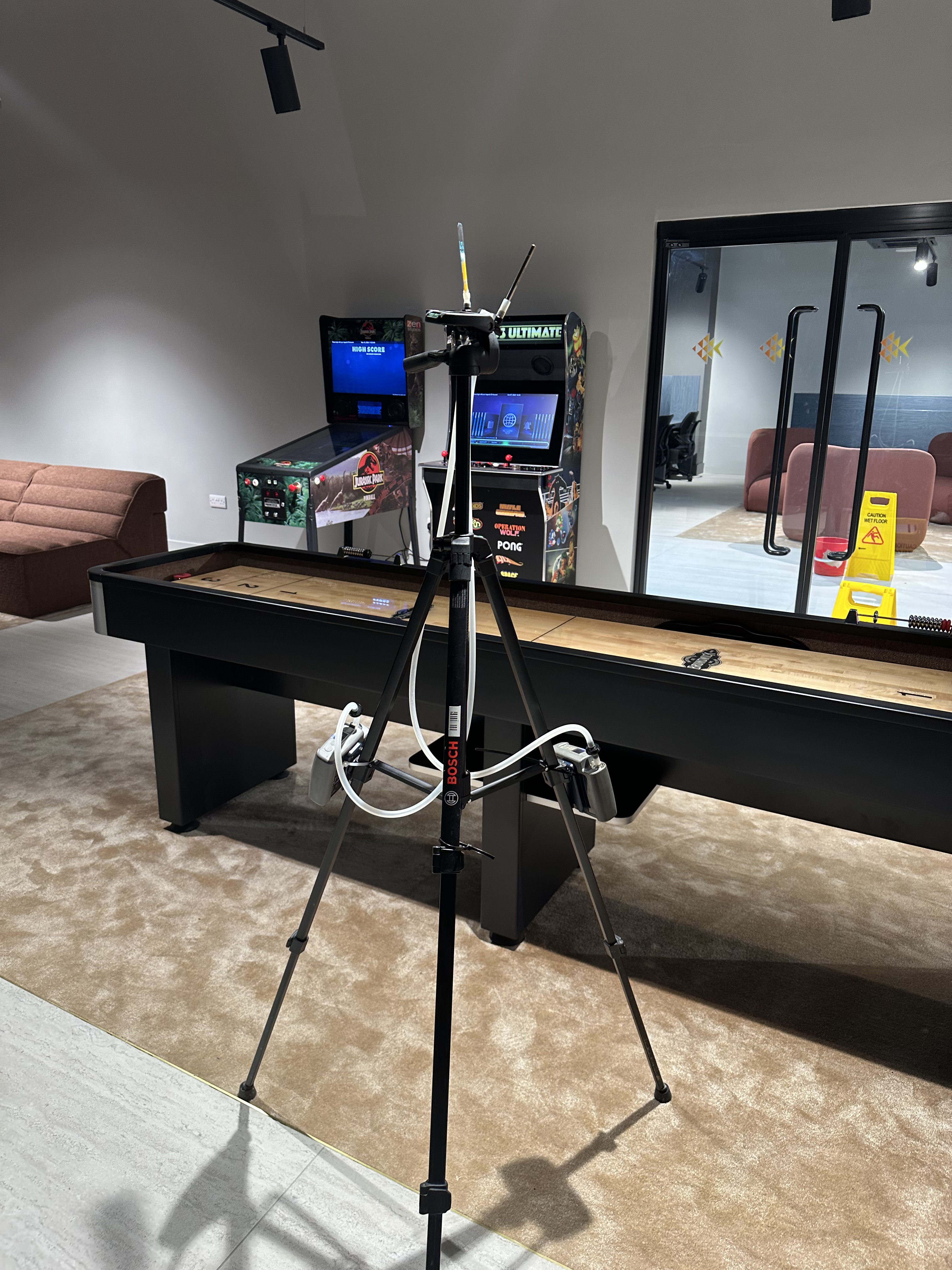
Indoor Air Quality Testing identifies and measures indoor pollutants after construction so that a project can meet BREEAM performance criteria. It focuses on pollutants commonly associated with new materials and finishes, such as Total Volatile Organic Compounds (TVOCs) and formaldehyde from flooring, adhesives, paints, joinery and sealants.
Testing takes place once construction is complete, the building has been cleaned, ventilation systems are fully operational and a pre-occupancy flush-out has been completed. This timing ensures that results reflect realistic conditions and demonstrate a safe internal environment.
BREEAM Indoor Air Quality Testing Requirements
BREEAM sets specific limits and procedures for Indoor Air Quality Testing to ensure reliable results. Therefore, testing must follow ISO 16000 methods, and a UKAS-accredited laboratory must analyse the air samples.
The sampling strategy also needs to reflect typical occupied areas so the results accurately represent the building. Finally, test results must compare against BREEAM Hea 02 (version 6) or Hea 04 (version 7) limits for TVOCs and formaldehyde to determine compliance.
| Test Parameter | BREEAM Limit |
|---|---|
| Total Volatile Organic Compounds (TVOC) | ≤ 300 µg/m³ |
| Formaldehyde | ≤ 100 µg/m³ |
| Carbon Monoxide (CO) | ≤ 10 mg/m³ (8-hour) |
| PM2.5 / PM10 (particulates) and others | Measured where required by the project brief |
Indoor Air Quality Testing Process
Site Assessment
We review floor plans, ventilation strategy and material schedules, then define a compliant sampling plan that reflects typical occupancy and room types in line with Hea 02 (BREEAM v6) or Hea 04 (BREEAM v7) guidance.
On-Site Sampling
Technicians deploy calibrated pumps and sorbent tubes for a typical eight-hour sampling period. Conditions are documented (temperature, humidity, ventilation operation) to support BREEAM evidence.
Laboratory Analysis
Samples are analysed by a UKAS-accredited laboratory using ISO 16000 methods. Results quantify TVOC, formaldehyde and any additional parameters specified by the assessment team.
BREEAM Reporting
You receive a full technical report including methodology, sampling locations, floor plans, measured concentrations, laboratory certificates of analysis and a clear compliance statement for Tracker Plus.
When is Indoor Air Quality Testing Done?
Testing is completed at the end of construction once the building is clean, dry and ventilation systems are operating as intended. BREEAM requires sampling before occupation and ideally after a pre-occupancy flush-out to reflect realistic conditions.
Our IAQ Testing Service

- Provision of IAQ Plan to gain further credits at RIBA Stage 2
- Nationwide on-site sampling by trained technicians
- BREEAM compliant methodology and reporting
- ISO 16000 methods and UKAS-accredited analysis
- Sampling plan, floor-plan mark-ups and full evidence pack
- Typical 48–72 hour turnaround from lab receipt (project dependent)
Related Services
IAQ testing follows on from the Indoor Air Quality Plan produced at design stage. For ventilation commissioning, see Part F Ventilation Testing. For wider BREEAM support, see BREEAM Consultancy. Return to the Air Quality hub.
Frequently Asked Questions
When is post-construction IAQ testing required?
Post-construction indoor air quality testing is required for BREEAM Hea 02 credits, and is increasingly required as a planning condition on developments in urban areas with poor ambient air quality. It is carried out after construction is complete and the building has been ventilated for a set period to allow initial off-gassing from materials to dissipate.
What pollutants are tested in indoor air quality testing?
Build Energy tests for formaldehyde, total volatile organic compounds (TVOCs), carbon monoxide (CO), nitrogen dioxide (NO2), and particulate matter (PM2.5 and PM10). The specific pollutants tested depend on the BREEAM scheme version or planning condition requirements.
What happens if IAQ testing fails?
If pollutant concentrations exceed the target values, the building must be ventilated further and re-tested. The most common causes of failure are elevated formaldehyde from new furnishings, adhesives and flooring, and elevated VOCs from paints and surface finishes. Build Energy advises on ventilation strategies to reduce concentrations before re-testing.
How long does an IAQ test take?
Passive sampling for IAQ testing typically requires samplers to be in place for 7–14 days, depending on the method used. Build Energy deploys and collects samplers and arranges laboratory analysis, providing a report with results against the BREEAM target concentrations.
Does Build Energy provide both the IAQ Plan and the post-construction testing?
Yes. Build Energy provides Indoor Air Quality Plans and post-construction IAQ testing as an integrated service. Using a single consultant for both ensures consistency between the plan and the testing methodology, and simplifies the BREEAM evidence submission.
Call 0330 055 34 05 · email be@buildenergy.co.uk · or tell us about your project →