
SBEM applies to all new non-domestic buildings and any significant extension or refurbishment in England, Wales and Scotland. The guide below explains how the assessment works, what a BRUKL report contains, and when your commercial project will need one.
What is SBEM?
SBEM, or ‘Simplified Building Energy Model’ assesses the energy performance of non-domestic buildings in the UK. It calculates the energy required for heating, cooling, ventilation, and lighting.
How SBEM Works
SBEM evaluates a building’s energy use and carbon dioxide emissions over a 12-month period. This method provides a clear picture of the building’s energy efficiency. Non-domestic buildings include offices, warehouses, retail units, and leisure centers.
Purpose of SBEM
SBEM serves two main purposes:
- Demonstrating compliance with Part L of the Building Regulations (BRUKL Report).
- Producing Energy Performance Certificates (EPCs).
What is a BRUKL Report?
The BRUKL report shows whether a building meets energy regulations. It includes details on carbon emission targets, solar gain, and minimum standards for building fabric and services.
When is a BRUKL Report Required?
A BRUKL report is required before construction begins on a new builds. It’s also necessary for existing buildings that don’t meet minimum standards, showing that CO2 emissions are offset elsewhere.
The Design Process
SBEM assessments are crucial in two stages of the building process. The first, during the “design” phase, evaluates the building’s energy efficiency to secure building permission. This assessment ensures the design meets regulatory standards before construction begins.
As-Built Process
The second stage, the “as-built” assessment, occurs after construction. It verifies that the completed building actually meets that design stage energy performance and complies with regulations. This step is essential for obtaining the completion reports and Energy Performance Certificate (EPC), both of which are required by the Building Control Officer.
Applications of SBEM
Establishing the energy performance of a building early in the design process is critical for any scheme. Very often an energy assessment is driven by a need to demonstrate compliance with the relevant building regulations. In our typical work this is generally Part L in England & Wales, Document F in Northern Ireland and Section 6 in Scotland.
Meeting Higher Standards
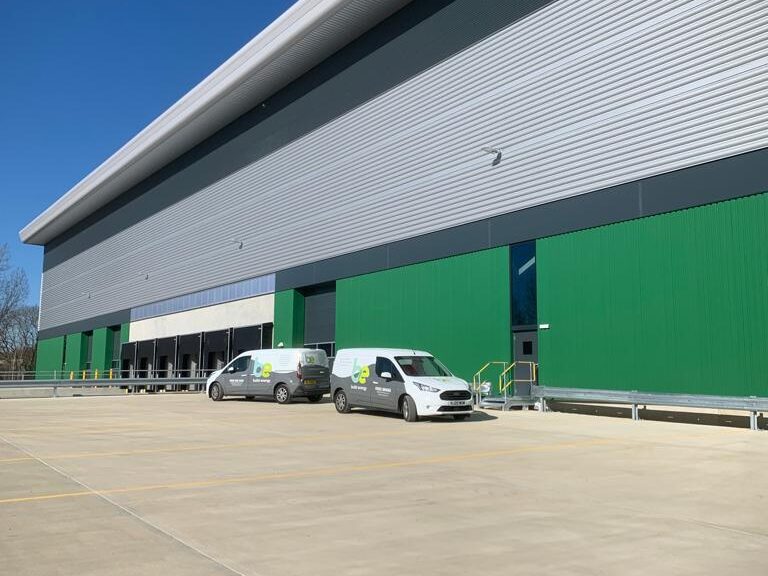
All new commercial buildings need SBEM Calculations
In some cases, local planning rules may require higher standards than those set by Part L. For example, in London, the Greater London Authority (GLA) may require a 35% improvement beyond Part L for major developments. SBEM is also used to meet additional sustainability measures, such as BREEAM.
Key Components of an SBEM Assessment
Input Data for SBEM Calculations
To conduct an SBEM assessment, an assessor first enters the geometry of the building and zones it into different ‘activities’. SBEM calculations differ from SAP Calculations in the way that they assign a use, not only for the building, but for the various zones within it. These will have different assumptions about the use of the building services and occupancy.
Key Factors Considered
The assessment considers various factors, including the construction type and specific U-values for walls, roofs, floors, and windows. The efficiency of heating, hot water, and ventilation systems is also included, ensuring a comprehensive evaluation of the building’s energy performance.
The services within commercial and public buildings tend to be much more complex and wide ranging, and so the options within SBEM are much broader than for domestic applications.
Software Tools
We are often asked what the difference is between the software tools we use. You may see reference to things like iSBEM, DesignBuilder, IES and TAS.
These are different tools that we can use to carry out assessments, but they all use the underlying SBEM methodology.
The difference is that tools like DesignBuilder, IES and TAS offer the ability to carry out DSM (Dynamic Simulation Modelling) analysis.
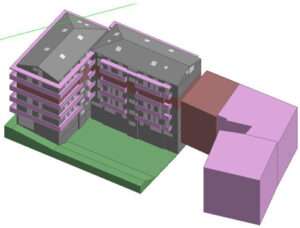
These tools allow the assessor to carry out full 3D modelling and gives a much more accurate and tailored assessment, allowing for more design flexibility and the ability to design out the things we don’t want, like overheating, and design in the things we do want, like daylighting levels and occupant comfort.
Why SBEM Compliance Matters
Meeting Part L of the Building Regulations is not the only reason to commission an SBEM assessment. By modelling actual energy use across each zone and activity type, the process identifies where a building is inefficient before construction begins – giving design teams the opportunity to improve fabric performance, reduce M&E plant sizes, and lower running costs. For commercial clients operating across a portfolio, consistent SBEM data also supports longer-term carbon reduction reporting and sustainability commitments.
SBEM vs SAP: Key Differences
Both SBEM and SAP are Part L compliance tools but they serve entirely different building types. The table below sets out the main differences to help identify which calculation your project requires.
| SBEM | SAP | |
|---|---|---|
| Building type | Non-domestic / commercial | Domestic / residential |
| Regulations | Part L2A (new build), Part L2B (existing) | Part L1A (new build), Part L1B (existing) |
| Primary output | BRUKL report + EPC | SAP report + EPC |
| Applies to | Offices, retail, industrial, schools, leisure | Houses, flats, conversions, extensions |
| Assessed by | Accredited SBEM assessor | Accredited SAP assessor |
| New build | Yes – all non-domestic new builds | Yes – all residential new builds |
| Conversions | Change of use to non-domestic | Change of use to residential |
Frequently Asked Questions
What does SBEM stand for?
SBEM stands for Simplified Building Energy Model. It is the UK Government’s approved methodology for assessing the energy performance of non-domestic buildings under Part L of the Building Regulations. For a full overview of our Part L SBEM calculation services, including design-stage and as-built assessments, visit our services section.
When is an SBEM calculation required?
SBEM calculations are required for new non-domestic buildings and significant extensions or refurbishments under Part L2A and Part L2B. You need a design-stage calculation to obtain Building Regulations approval, and an as-built calculation once construction is complete.
What is a BRUKL report?
A BRUKL (Building Regulations UK Part L) report is the output document from the SBEM software. It demonstrates whether the building meets compliance targets for CO₂ emissions, energy use and fabric performance, and is submitted to the local authority as part of the Building Regulations application.
How long does an SBEM assessment take?
A typical SBEM assessment takes 2–5 working days depending on building complexity and the completeness of information provided. Having full architectural drawings and M&E specifications ready at the outset speeds up the process considerably.
What is the difference between SBEM and SAP?
SAP (Standard Assessment Procedure) is used for residential buildings, while SBEM is used for non-domestic and commercial buildings. Both measure energy performance against Part L of the Building Regulations, but use different calculation methods suited to each building type.
Call 0330 055 34 05 · email be@buildenergy.co.uk · or tell us about your project →