
Most local planning authorities require daylighting calculations for residential developments, particularly in urban areas where surrounding buildings can restrict natural light. A BR 209 daylighting report demonstrates that new rooms will meet minimum daylight thresholds and confirms that neighbouring properties will not be materially affected by the proposed development.
Daylighting Calculations to BR 209
Adequate natural light is as important to occupant wellbeing as low noise and low odour levels. Adequate levels of daylight are important not only to light and heat the home, but also for an occupant’s emotional well-being.
Research shows that natural daylight has a significant positive effect on mental health and wellbeing. People who receive little natural light are more susceptible to depression and low mood. This is common in northern countries, such as Norway, Iceland and Canada where daylight is scarce during the winter months.
Daylighting calculations are often assessed alongside a Sunlight Analysis, which uses different criteria.
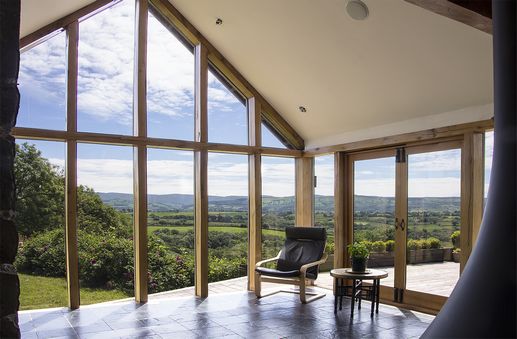
Daylighting calculations help designers mitigate the risk of poor natural light. They also earn credits under environmental assessments such as the Home Quality Mark and BREEAM.
Developing in high density urban, built up areas can often lead to poor light levels in some dwellings. Daylighting analysis takes account of a number of factors including ‘view of the sky’, and whether there is enough light at a working plane (desk) level within the dwelling.
This will very much depend on orientation, elevation and surrounding buildings – for example on a block of apartments, some units may experience considerably greater daylight loss than others.
When Are Daylighting Calculations Required?
Planning authorities and scheme assessors commonly require daylighting calculations for:
- For a Home Quality Mark assessment
- For a BREEAM Assessment
- Because a planning application requires them
- Because the designers would like to mitigate against poor levels of natural light
Daylighting is not a mandatory issue in HQM or (the now defunct) Code Assessment, but most of our clients find it a relatively inexpensive and effective means of gaining extra credits.
BREEAM also offers credits in its Health & Wellbeing / Visual Comfort category.
In both instances the scheme assessor must submit daylighting calculations as evidence of compliance. Typical daylighting targets are 1% in bedrooms, 1.5% for living rooms, and 2% for kitchens.
Working plane calculations need to show that 80% of the working plane in a room receives direct light from the sky.
Daylighting Compliance Standards
Several key standards exist to provide guidance:
- BS 8206-2:2008 Lighting for Building – Part 2 Code of Practice for Daylighting
- CIBSE Lighting Guide LG10:1999 – Daylighting & Window Design
- Communities & Local Government Code for Sustainable Homes Technical Guide Nov 2010
Engineers can perform daylight calculations manually using the above standards and formulae.
Alternatively, designers can use Dynamic Simulation Modelling (DSM) software such as Designbuilder, IES and TAS. These allow for much more sophisticated 3D modelling and analysis.
Climate Based Daylight Modelling
Climate Based Daylight Modelling is a specific methodology for undertaking daylight checks. Unlike standard daylight checks, CBDM uses real climate data rather than the CIE standard overcast sky, giving a more accurate picture of natural light levels.
It is most applicable for education projects, since the Education Funding Agency (EFA) made it a requirement for new school designs.
Build Energy can provide daylighting analysis across a multitude of buildings, from one-off self builds to very large and complex mixed use schemes. We can create bespoke reports tailored to your requirements, and provide guidance and solutions to any issues.
Daylighting calculations often accompany a planning Energy Statement. For overheating risk, see Overheating Assessment. For BREEAM credits, see BREEAM Consultancy. Return to the Daylight and Sunlight hub.
Frequently Asked Questions
What Does ADF (Average Daylight Factor) Measure in a Daylight Assessment?
Average Daylight Factor (ADF) measures the amount of diffuse skylight received by a room, expressed as a percentage of the unobstructed exterior illuminance. It accounts for the size, position and transmission of windows, room geometry and internal reflectances. BREEAM Hea 01 sets target ADF values by room type: kitchens 2%, living rooms 1.5%, bedrooms 1%.
What is Vertical Sky Component (VSC)?
Vertical Sky Component (VSC) measures the amount of diffuse sky light that reaches the centre point of a window. Under BR 209 guidance, BR 209 considers a VSC of 27% or more adequate. Where a new development reduces a neighbouring window’s VSC to below 27%, or by more than 20% of its existing value, the assessment may identify a material impact on daylight.
What is a sunlight assessment?
A sunlight assessment calculates the annual probable sunlight hours (APSH) at windows and outdoor spaces, to check that they receive adequate direct sunlight. For main living room windows facing within 90 degrees of due south, BR 209 recommends achieving at least 25% APSH for these windows, with at least 5% during the winter months.
Can daylighting calculations be carried out at planning stage?
Yes. Build Energy carries out daylight and sunlight assessments at planning stage to accompany planning applications. For developments that may affect neighbouring properties, we assess both the new development’s internal daylighting and the impact on neighbouring windows.
Does Build Energy use specialist daylighting software?
Yes. Build Energy uses specialist daylight modelling software to calculate ADF, VSC and sunlight hours to the methodology set out in BR 209 and BS 8206-2.
What Is BR 209 and What Guidance Does It Provide?
BR 209 (Site Layout Planning for Daylight and Sunlight) is the BRE’s guidance document setting out recommended methods for assessing daylight and sunlight in new development. It provides target values for Average Daylight Factor, Vertical Sky Component and Annual Probable Sunlight Hours, and is the reference standard used by planning authorities across England and Wales when assessing daylight and sunlight impact. BR 209 guidance is advisory rather than mandatory – planning authorities may apply it flexibly to reflect local circumstances.
Do Tall Buildings in London Need a Different Daylight and Sunlight Approach?
Yes. The BRE has acknowledged that strict BR 209 daylight and sunlight targets are often unachievable in high-density, high-rise schemes without unreasonably constraining development. Planning guidance for London supports a more flexible, context-based assessment for tall buildings in dense urban areas, weighing local density, existing daylight levels and design mitigation rather than applying BR 209 numerical targets rigidly. Build Energy has experience preparing daylight and sunlight assessments for tall building schemes across London using this flexible approach.
Call 0330 055 34 05 · email be@buildenergy.co.uk · or tell us about your project →