
Dynamic simulation modelling (DSM) is a time-step computational analysis of a building’s thermal and energy performance across a typical year. In particular, it accounts for climate data, occupancy patterns, fabric properties, and mechanical systems. As a result, engineers use DSM as the most accurate method available for predicting operational energy use and overheating risk.
How Dynamic Simulation Modelling Works
DSM is an extremely accurate and powerful tool for assessing the environmental performance of a building. Also known as thermal modelling, it models and analyses a range of sustainability factors typically arising from planning or building regulations drivers. These include energy compliance and CO2 emissions, overheating (thermal comfort) and daylighting analysis. We can also use it for bespoke design factors including:
- Ventilation verification
- Projected annual energy consumption
- Facade studies
- Projected internal temperature checks
DSM in Use
DSM is much more commonly used for analysis of non-domestic schemes – for example large, mixed use developments like hotels, office blocks or other complex commercial property. However we are seeing an increasing demand for it’s use on residential developments.
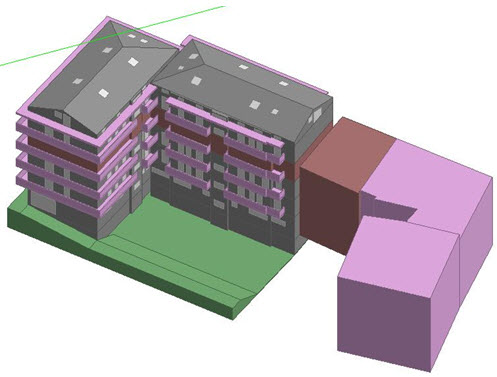
Dynamic Simulation Modelling (DSM)
Many of our clients are M&E consultancies and engineers – and having the ability to carry out detailed analysis can assist early stage building services design. We can help ensure planning obligations are met – including London Plan energy requirements for major developments.
DSM allows a much more accurate analysis than is possible with standard Part L energy assessment tools such as SAP and SBEM.
This is partly due to a much greater emphasis on external factors such as solar gain and the effect of glazing and thermal mass, but also due to more accurate occupancy, behavioural and energy use profiles.
BREEAM Credits
BREEAM is the leading environmental standard for buildings in the UK. Carrying out a thermal model provides the opportunity to improve a variety of characteristics and demonstrate wider environmental performance, and we can use DSM to gain BREEAM credits within issues like daylight (Hea 01), thermal comfort (Hea 04) and reduction of energy and emissions (Ene 01).
Dynamic Simulation Modelling – The Process
The DSM process starts with geometry – the assessor will create an exact 3D model of the building. Software tools then have built in modules to allow the detailed analysis of:
- Thermal Performance and Construction
- Renewables and Technologies
- Energy use
- CO2 Emissions
- Overheating
- Daylight and Sunlight Assessment
- Ventilation and Airflow
- Occupant Comfort
- BREEAM / LEED Performance
DSM vs SAP vs SBEM: Which Method Is Required?
DSM, SAP, and SBEM all assess building energy performance but serve different building types and compliance scenarios. The table below shows when each method applies.
| Method | Building Type | When Required | Regulatory Standard |
|---|---|---|---|
| DSM | Commercial and residential | Complex buildings, BREEAM Ene 01, TM59 overheating, TM54 operational energy, London Plan | CIBSE TM59, TM52, TM54; Part L |
| SAP | Residential (new build and conversion) | All new-build and converted dwellings – produces an EPC and Part L1A compliance report | Part L1A; SAP 10.2 |
| SBEM | Non-domestic (commercial, education, healthcare) | All new and refurbished non-domestic buildings requiring building regulations compliance | Part L2A; SBEM methodology |
Frequently Asked Questions
What is dynamic simulation modelling (DSM)?
Dynamic simulation modelling (DSM) is a detailed, software-based method of analysing a building’s thermal and energy performance over time. Unlike simplified calculation tools, DSM accounts for weather data, occupancy patterns, internal heat gains, and building fabric to produce accurate hour-by-hour predictions of energy use and internal temperatures.
When is DSM required?
Several scenarios require DSM. Planners and building control teams require it for complex non-domestic buildings where simplified Part L compliance methods are insufficient. It is also required for CIBSE TM59 overheating assessments on high-risk residential sites, and for certain BREEAM credits including Ene 01. See also our TM54 operational energy assessment service. Some local authorities specify DSM in energy planning conditions for major developments.
What can DSM be used to assess?
Build Energy uses DSM to assess energy compliance and CO₂ emissions, overheating risk (thermal comfort), natural ventilation performance, projected annual energy consumption, and facade and shading strategies. It is also used to verify mechanical ventilation system performance and to support BREEAM submissions.
How long does a DSM study take?
Timescales depend on the size and complexity of the building. A straightforward DSM study for a single building typically takes 3–6 weeks from receipt of information. More complex multi-building schemes or those requiring iterative design support may take longer. Early engagement at RIBA Stage 2 is recommended to allow design flexibility.