
What are SAP Calculations for Extensions?
Part L of the Building Regulations requires a SAP calculation for extensions when the design adds a new habitable room to an existing dwelling in England or Wales. The assessment checks whether the extended dwelling meets the Target Emission Rate. It accounts for the retained structure alongside the new extension’s insulation, glazing, heating, and ventilation specification. Build Energy’s accredited SAP assessors produce design-stage and as-built calculations for single-room extensions, multi-room additions, loft conversions, and garage conversions across the UK.
Part L of the Building regulations requires that areas of new glazing should account for no more than 25% of new floor area. Of course, many extension designs will propose more than this, and therefore will not comply with this rule.
However, we can help you overcome this hurdle easily and quickly. Accredited energy assessors produce SAP calculations, and can be used to demonstrate how your proposal complies with building regs requirements, even with large areas of glazing.
SAP Calculations for Extensions – How Do They Work?
Glazing and openings lose more heat than walls and roofs, which is why the building regs set a limit. However by upgrading or over compensating in construction of other elements, or perhaps demonstrating additional, useful solar gains by virtue of that extra glazing, the negative impact of larger expanses of glass can be removed.
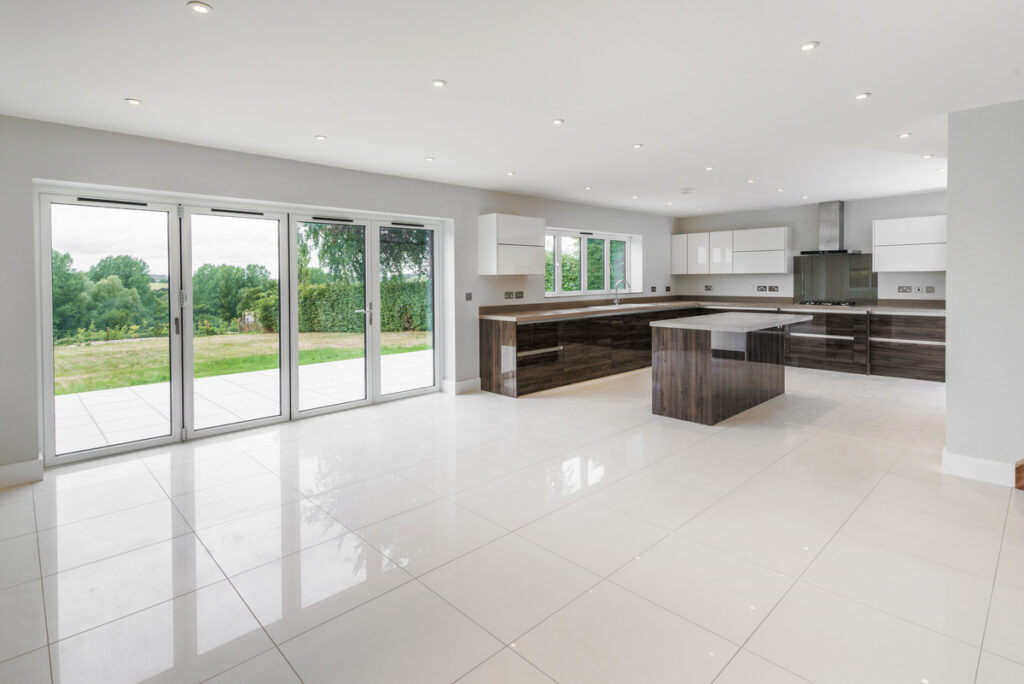
In addition, there are options to take account of upgrades to the existing property – especially useful if the dwelling is receiving a make-over too. We can guide you through all the options.
The trade-off calculation is carried out using SAP-compliant energy modelling software by an accredited energy assessor. The assessor inputs the proposed specification – insulation levels, window U-values, glazing areas, heating system type and efficiency, and ventilation strategy – to calculate the overall energy performance against the Part L target.
Where a design falls short, the calculation identifies which changes will bring it into compliance most efficiently. Common adjustments include improving window U-values (for example from 1.6 to 1.4 W/m²K), upgrading wall or roof insulation thickness, or specifying a higher-efficiency heating appliance. Build Energy advises on the most cost-effective route as part of every calculation.
Many ‘change of use’ schemes will also be subject to SAP regulations, like flat conversions or commercial-to-residential conversions.
When Is a SAP Calculation Required for an Extension?
Whether your extension needs a SAP calculation depends on how much glazing is proposed relative to the new floor area. The table below covers the most common scenarios.
| Extension type | SAP calculation required? | Reason |
|---|---|---|
| Glazing ≤ 25% of new floor area | No | Complies with Part L default standards |
| Glazing > 25% of new floor area | Yes | Trade-off method required to demonstrate compliance |
| Loft conversion with large roof lights | Often yes | Most exceed the 25% glazing threshold; check ratio before submitting plans |
| Garage conversion (no new glazing) | No | No new glazing added; standard insulation specification applies |
| Conservatory with thermal separation | No | Exempt under Part L provided thermal separation is maintained |
Therefore, the simplest way to avoid a SAP calculation is to keep all new glazing – windows, roof lights, and glazed doors – within 25% of the new floor area. If your design exceeds this, Build Energy can run the trade-off calculation quickly, usually from plans alone.
What Do We Need?
To carry out a full SAP assessment, your assessor needs two things:
- A set of existing and proposed plans, to scale
- A summary of the intended construction and services details
The work is then carried out with a desktop assessment. We don’t need to come to site or carry out any surveys at all.
SAP Calculations for Extensions – Our Speciality

We carry out a large volume of SAP Calculations for extensions on a daily basis, and can provide you with all the help and guidance you need.
We’ve helped many hundreds of architects, contractors and homeowners all over the country and it is extremely rare that we do not find a solution – with no extra cost or change to your plans.
If required, we will even deal with your Building Control Officer, understand what is required, and take care of everything – Easy!
To find out more about conversions and extensions see Part L – The Info.
Related Services
Extensions that exceed the default Part L standards benefit from an early review of the fabric specification. For a full explanation of how SAP calculations work, visit our detailed guide. On larger residential projects, you may also require an Energy Statement for planning. Return to the Part L SAP Calculations hub.
Frequently Asked Questions
Does every house extension need a SAP calculation?
No. Extensions that comply with the default Part L standards – including glazing no greater than 25% of new floor area – do not require a SAP calculation. A SAP trade-off calculation is only needed when the proposed glazing exceeds 25%, or when other Part L requirements cannot be met by default.
What is the 25% glazing rule for extensions?
Part L of the Building Regulations limits glazing in extensions to 25% of the new floor area as the default compliance route. If a proposed extension exceeds this – common with open-plan rear extensions or orangeries – a SAP calculation is needed to demonstrate that the additional heat loss is offset by improvements elsewhere, such as better-insulated walls or a more efficient heating system.
How does the SAP trade-off method work?
The SAP trade-off approach allows a designer to exceed the default glazing limit provided the overall energy performance of the extension is no worse than if the default specification had been applied. Build Energy models both the default and proposed specifications and confirms whether the trade-off is satisfied.
What information does Build Energy need for an extension SAP?
We typically need the floor plan with dimensions, the proposed glazing area and specifications, wall and roof construction details, and information about the existing heating system. In many cases a draft drawing is sufficient to get started.
How quickly can Build Energy produce a SAP calculation for an extension?
Extension SAP calculations are usually straightforward and can typically be completed within 1–2 working days of receiving the required information. Urgent turnaround is available on request.
Call 0330 055 34 05 or email be@buildenergy.co.uk.