
A thermographic survey uses non-destructive technology to identify heat loss, cold bridges, insulation defects and air leakage paths in building fabric. In addition, thermographic surveys provide photographic evidence of construction quality for BREEAM submissions, insurance assessments and energy improvement programmes.
What is a Thermographic Survey?
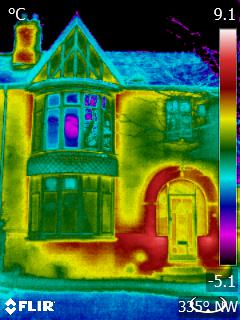
Effect of thermal bridging through arched brickwork
Every object above absolute zero (-273.15°C) emits infrared light, which remains invisible to the human eye. Thermographic cameras capture this infrared radiation and convert it into visible images. As a result, this technology proves invaluable across a range of applications, including building assessments and diagnosing electrical faults.
Applications of thermography in buildings
In building assessments, thermographic surveys serve several key purposes.
- Thermal bridging: Identify areas where heat escapes, which can lead to increased energy costs.
- Continuity of insulation: Ensure insulation is properly installed to maintain energy efficiency.
- Air leakage: Detect drafts and pinpoint points of air infiltration, improving overall comfort.
- Moisture detection: Find water leaks or damp areas that can compromise structural integrity.
Furthermore, these assessments play a crucial role in verifying build quality without intrusive methods. In practice, clients often request thermographic surveys, and they frequently form part of the BREEAM certification process.
Conducting an effective thermographic survey
To achieve optimal results, ensure a minimum temperature differential of 10°C between the building’s interior and exterior. Here’s how to prepare for a successful survey:
Ideal conditions for surveying
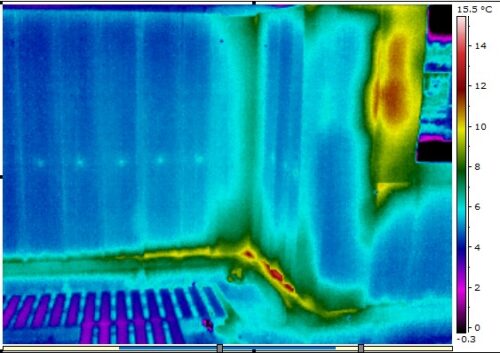
Evidence of air leakage in a parapet
- Timing: Conduct surveys several hours after sunset. This timing allows for an accurate assessment of the temperature differential.
- Building status: Make sure the building is complete and the heating system operates effectively. Keep the heating on for several days before the survey to reach the necessary temperature difference.
- Weather monitoring: Check the weather forecast ahead of time. Aim for wind speeds below 5 m/s and no precipitation, with external surveys best performed under cloud cover.
Preparing the building
- Heating systems: Confirm that all heating systems in the surveyed areas function properly. If certain areas don’t heat sufficiently, consider using temporary electric heaters.
- Site management: Inform all site personnel about the importance of maintaining the heating conditions. Open doors or windows before the survey can lead to misleading temperature readings.
Thermographic surveys and BREEAM certification
BREEAM is a globally recognised environmental rating scheme that awards credits for conducting thermographic surveys. The following conditions must be satisfied to achieve the necessary credit:
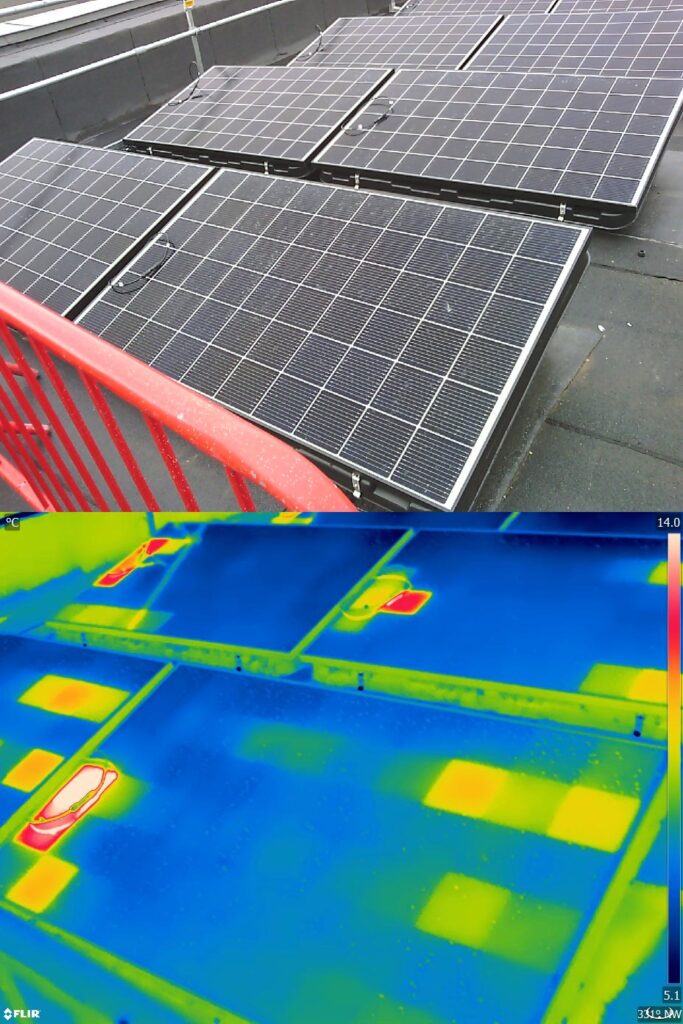
Faulty PV cells
- A minimum temperature differential of 10°C.
- Wind speeds below 5 m/s.
- No precipitation during the survey.
Due to the narrow window of opportunity, internal surveys can often be more effective, minimising weather-related influences.
What does a thermal imaging survey detect?
Also known as thermal imaging surveys or infrared building surveys, thermographic assessments use specialist cameras to reveal a range of building fabric defects and performance issues.
- Thermal bridging: areas where heat escapes through structural elements, increasing energy costs.
- Insulation gaps: missing or incorrectly installed insulation that compromises thermal performance.
- Air leakage paths: draughts and infiltration points affecting comfort and air tightness test results.
- Moisture and damp: water ingress and damp areas that can lead to mould growth and structural damage.
- PV panel faults: identifying underperforming or failed cells within solar arrays.
Surveyors carry out thermal imaging surveys both externally and internally, with internal surveys often delivering more consistent results when external conditions are variable.
Related Services
Together, thermographic surveys complement Air Tightness Testing and Thermal Bridge Calculations to provide a complete picture of building fabric performance. For energy performance assessments, see SAP calculations.
Frequently Asked Questions
What is a thermographic survey?
A thermographic survey uses an infrared camera to detect temperature differences across the surface of a building’s fabric, revealing heat loss through cold bridges, gaps in insulation, air leakage paths and moisture ingress. The survey is typically carried out at night or in overcast conditions to maximise the temperature differential between inside and outside.
When should a thermographic survey be carried out?
Thermographic surveys are most effective in winter, when there is a significant temperature differential between the inside and outside of the building – typically when the external temperature is 10°C or more below the internal temperature. Surveys should be carried out at night or on heavily overcast days to avoid solar gain interfering with the thermal image.
What BREEAM credits does thermography support?
Thermographic surveys support the BREEAM Ene 02 (Fabric Energy Efficiency) credit, where post-construction thermography is used to verify that the building has been constructed to the designed specification. Evidence of a thermographic survey demonstrating no significant thermal defects can contribute to higher BREEAM ratings.
Can a thermographic survey identify the cause of condensation?
Yes. In particular, thermographic surveys frequently identify cold bridge locations where surface temperatures are low enough to cause condensation and mould growth. Build Energy’s reports identify the defects found and advise on remediation to prevent moisture-related damage.
Does Build Energy carry out thermographic surveys on completed new-build and existing buildings?
Yes. Build Energy carries out thermographic surveys on new-build dwellings (typically as part of a BREEAM submission or air tightness programme), existing residential and commercial buildings (for energy improvement surveys), and public buildings. We cover England and Wales.
Call 0330 055 34 05 · email be@buildenergy.co.uk · or tell us about your project →